Blog
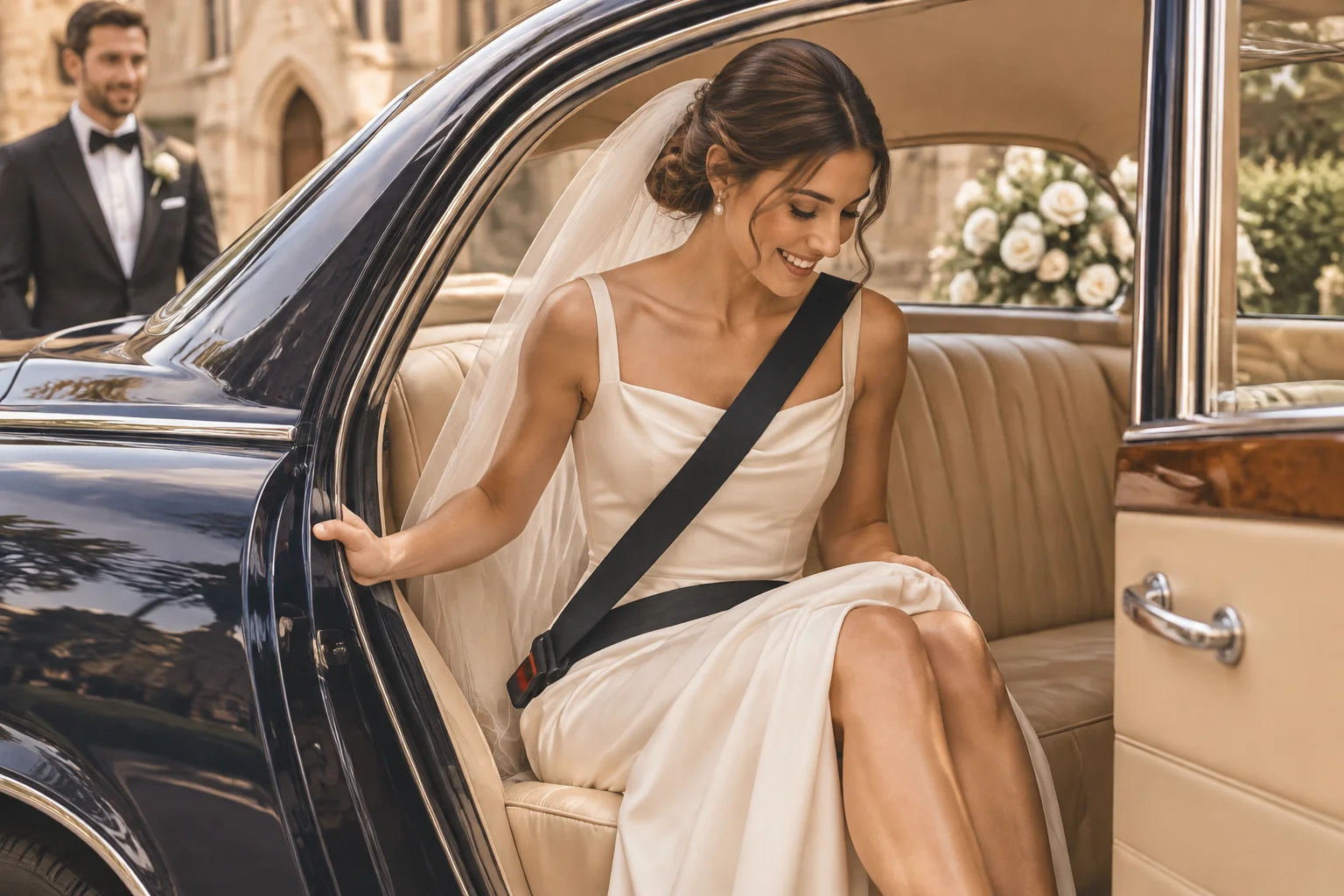
Entering a wedding car comfortably means sitting backside first, keeping your knees together, then turning both legs inside while a helper lifts your gown clear of the doorway. Learning how to enter a wedding car starts with the seat, not the skirt. Never step into the footwell and twist beneath a full dress.
Your gown, shoes and passenger space need to work together on the day. A fitted skirt can restrict movement, while layered tulle needs careful gathering. Plan the entry before the ceremony so your arrival feels calm rather than rushed.
Choose a passenger seat you can reach without climbing across other people, then arrange assistance before approaching the door. Our chauffeured hire prices start from $390. However, dress comfort depends on access and seating space as much as appearance.
A bride wearing a full skirt needs somewhere to settle fabric after sitting. Meanwhile, a fitted gown needs room for a controlled turn. Compare our chauffeured vehicle options around those movements, rather than choosing by photographs alone.
Your gown affects how far you can bend, separate your knees and turn towards the seat. Ball gowns need space for layers, whereas fitted skirts can limit your stride. A train adds another task because someone must keep it clear of shoes, tyres and the door sill.
For example, a mermaid-style gown may look compact but restrict the movement needed to climb into a high seat. Soft tulle takes up more space, yet gathers differently from structured satin. Discuss the skirt's shape, underskirt and bustle alongside passenger numbers.
Seats Are Not Space: Selected stretch vehicles seat up to 12 passengers, but capacity does not measure room for a spread-out bridal skirt.
Approach the open door, turn your back towards the seat and sit before bringing your legs inside. Keep your knees together throughout the turn, provided your gown allows comfortable movement. The following sequence also gives your helper clear tasks without pulling on lace, sleeves or straps.
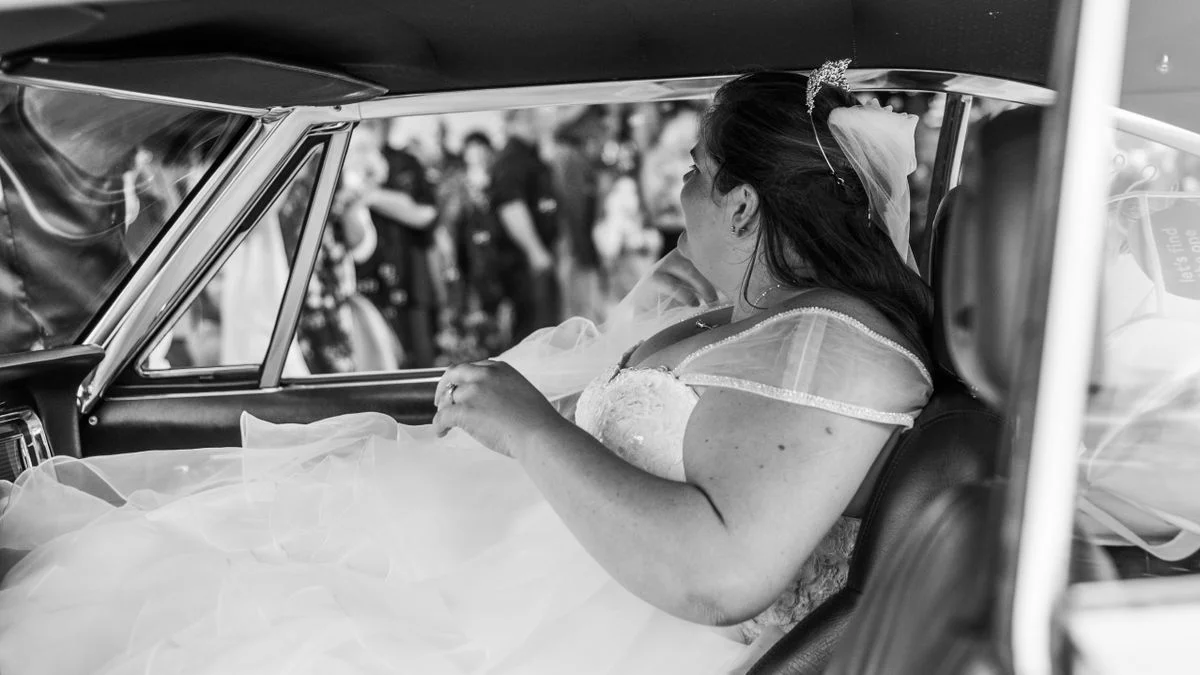
Move slowly enough to stop whenever fabric catches or your footing feels uncertain. Also, avoid gripping a moving door for support. Your chauffeur can manage the door while your helper concentrates on your dress.
After entering your wedding car, position the lap belt low across your hips and the shoulder belt across your chest. Follow the vehicle's belt instructions. Keep the webbing flat, untwisted and away from loose folds near the buckle. Never place the shoulder belt behind your back or beneath your arm to protect a bodice.
Lift loose tulle away from the latch before fastening, then spread the skirt without disturbing the belt's position. Keep your train inside the cabin rather than hanging through the doorway. Your helper can hold a clutch or handbag; secure a scarf away from the latch and door.
A beautiful arrival should never depend on hiding a seat belt or rushing a bride through a doorway.
When you enter a wedding car, your chauffeur should manage the door while your helper handles the gown. Arrange each role before boarding so nobody reaches across you unexpectedly. For balance, request a steady offered hand rather than a pull on your wrist.
Your helper should support gathered fabric from underneath, not lift it by delicate trim. Before departure, ask them to look along the sill for trapped lace or ribbons. Afterwards, the chauffeur can reopen the door while your helper collects the train before you stand.
To exit your wedding car safely, wait until it stops and your chauffeur opens the door, then release your belt. Turn towards the opening. Swing both legs out together with your knees close, and place your feet securely before standing. Ask for assistance as you rise and regain balance.
At the ceremony, your helper can arrange the train once you stand clear of the vehicle. At photo stops, gather it again rather than dragging it across the sill. Likewise, repeat the same approach at the reception, even when the bustle makes the skirt easier to handle.
| Vehicle Type | Dress Shapes to Discuss | Entry and Seating Considerations | What to Confirm Before Booking |
|---|---|---|---|
| Low sedan | Fitted skirts; structured bodices | Deeper bend; roof clearance | Seat height; doorway space |
| SUV limousine | Restrictive skirts; full gowns | Higher seat; controlled step | Step access; support needs |
| Vintage car | Long trains; layered skirts | Individual door and seat layouts | Chosen model; seated comfort |
| Stretch limousine | Wide skirts; bridal party outfits | Seat route; shared passenger space | Seating position; group size |
Low cars require more bending, while high vehicles can make lifting your body onto the seat harder. Vintage access varies by model, so appearance alone cannot determine comfort. Consider our chauffeur-driven 1949 Jaguar Mark V Convertible alongside your dress and passenger needs.
For example, a 4-passenger booking needs a seating plan that leaves your helper within reach. Include everyone travelling, including your 2 helpers, when discussing the seating layout.
Describe your gown, mobility needs, passengers and collection points when requesting wedding transport. We handle 500 weddings per year. Include ceremony waiting, photographs and reception delivery in your itinerary rather than treating each arrival separately.
Knowing how to enter a wedding car gives your vehicle choice a practical test: comfortable seating, secure restraint and controlled movement. A suitable car should serve the dress and the timetable together. Good car etiquette therefore leaves room for assistance instead of demanding a hurried entrance.
Protecting a quiet moment before the ceremony matters to us at Allure Limousines. We would prioritise a comfortable turn onto the seat over a dramatic entrance that leaves you struggling with your skirt. The photographs can follow once you feel steady.
These wedding car tips cover common concerns about assistance, low seats and keeping your dress clear of the doorway.
Yes, arrange a bridal helper to handle your gown while the chauffeur manages the door. Separate those roles so each person knows where to stand. Choose someone familiar with your train or bustle, especially when small fastenings or delicate lace need careful handling at several stops.
Turn your back towards the seat and lower yourself gradually before bringing your legs inside. Allow extra care for roof clearance as you move your head and shoulders through the doorway. Discuss restricted hip or knee movement during your enquiry because a deep bend may affect your choice.
Practising the sitting and turning movement in your wedding shoes can reveal balance problems before the day. Use a stable chair and keep delicate fabric off the floor. A dress fitting also offers a chance to discuss comfortable seated movement and how the skirt behaves around your knees.
Avoid placing beading, raised lace or bulky train folds beneath your body. Instead, arrange loose fabric alongside you without blocking the buckle or door. Ask your dressmaker about handling fragile decoration, since fabric construction matters more than whether the dress looks soft or light.
A helper travelling with you can manage the skirt at each stop, provided the seating arrangement allows comfortable space. Otherwise, arrange for someone to meet the vehicle before you exit. Keep your clutch with a designated person so you can concentrate on standing rather than collecting accessories.
Planning how to enter a wedding car starts with sharing your gown details and itinerary. Bring both when you request your Perth wedding transport quote. Tell us about the assistance you need so we can recommend a vehicle and chauffeur arrangement around your comfort.
Book Now
Tell us your date and occasion and we will match you with the perfect vehicle and chauffeur.